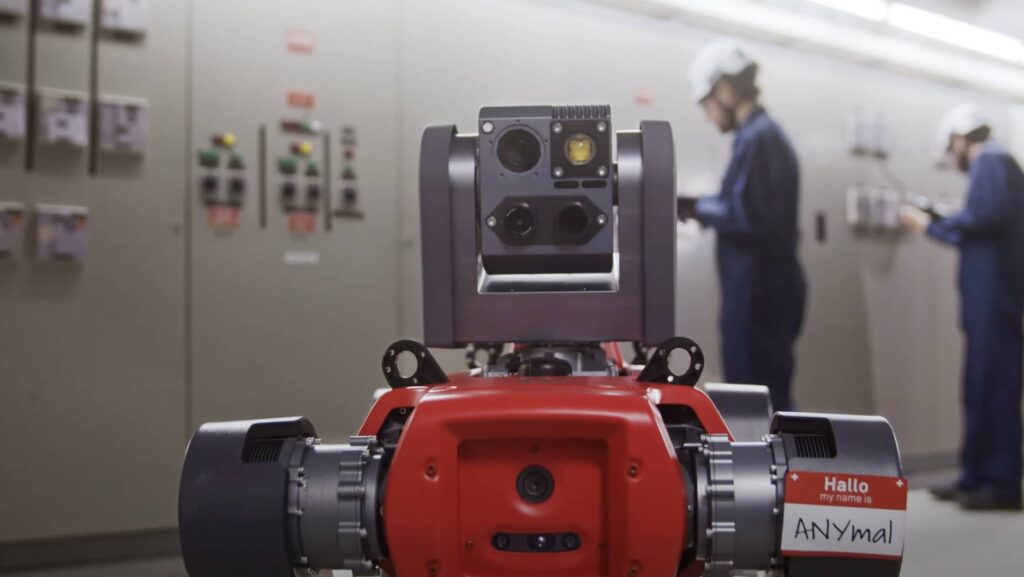
Embodied AI research connects perception and decision-making with physical action. Hardware should be chosen around the experiment’s interfaces, scale and repeatability rather than the ambition to buy the most visually impressive robot.
Practical guidance from Desert Horizon. Product examples illustrate a category; capabilities depend on the exact supplied configuration.
Start with the research question
Specify whether the experiment concerns locomotion, grasping, dual-arm coordination or navigation. Identify the observations and controls the team must access. A platform can have excellent mechanics yet be unsuitable if the purchased software package does not expose the required interfaces. Confirm access before committing the laboratory budget.
Define a repeatable environment
Prepare fixtures, objects, lighting and a controlled test space. Record the initial conditions and operator interventions so that repeated trials can be compared. The physical world introduces variation that a simulation can hide. A good experimental protocol distinguishes a reproducible result from a successful demonstration that cannot be repeated reliably.
Plan maintenance and support
Research platforms need time for calibration, repairs, software changes and safe recovery. Name the team member responsible for hardware readiness and keep a known working configuration. The ability to reproduce last week’s baseline can be more valuable than immediately adding another experimental feature. Expand the hardware only when it serves the next research milestone.
Three points to take into your project
- Confirm the necessary control interfaces.
- Record experimental initial conditions.
- Maintain a known working configuration.